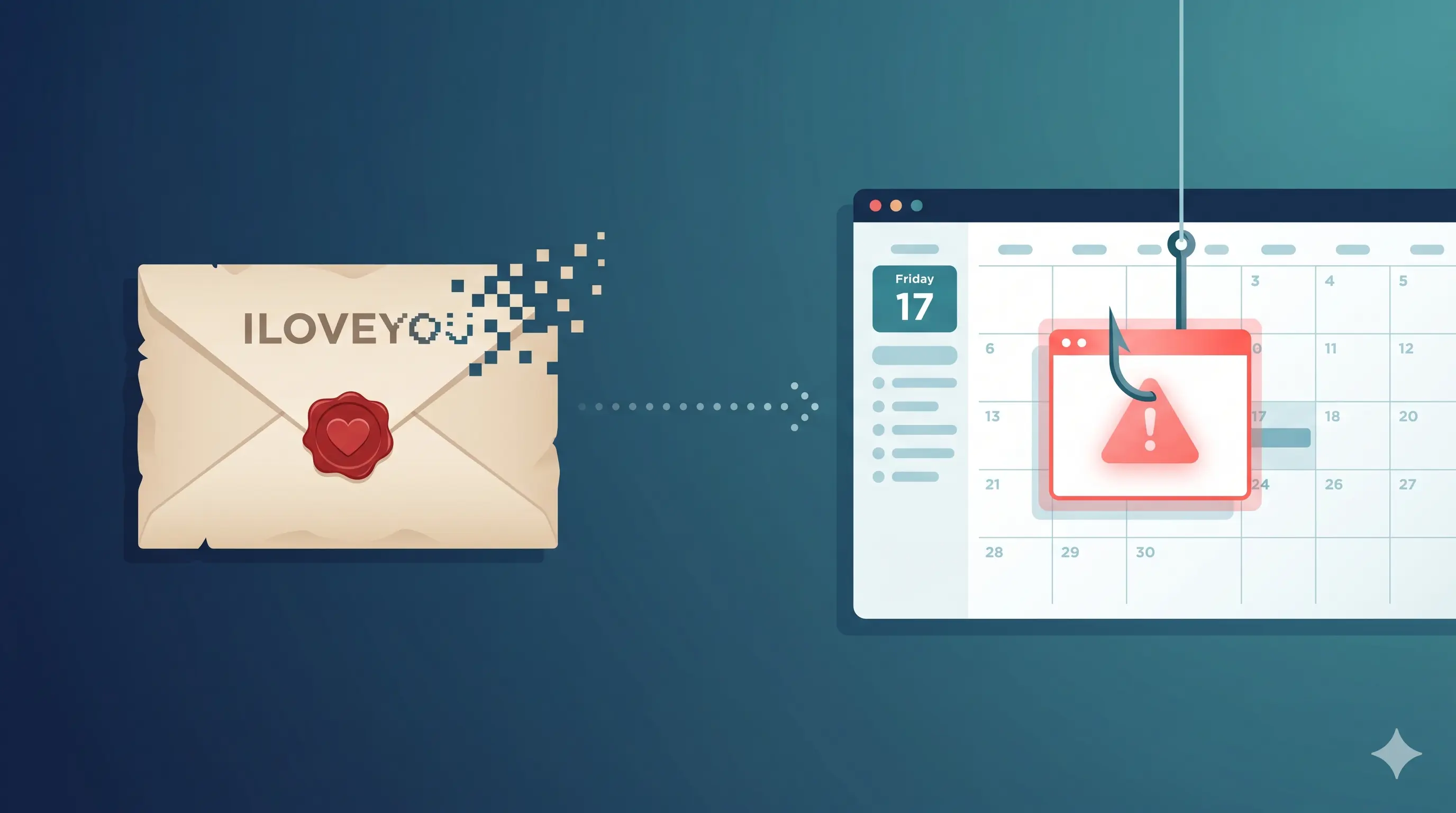
A Little Story: When Love Turns Into a Computer Virus
In this month of Valentine's Day, when love takes center stage, I'd like to take you on a little trip back in time… but not toward a romantic story. Instead, toward a fascinating — and instructive — tale from the world of cybersecurity. Because when you think about it, protecting our data is also a form of love: the kind we have for our peace of mind.
For this story, we need to go back to the year 2000. Back then, a new computer virus made its appearance: the infamous "ILOVEYOU." In short, users received an email (shown below) containing an attachment with a message claiming it was a love letter.
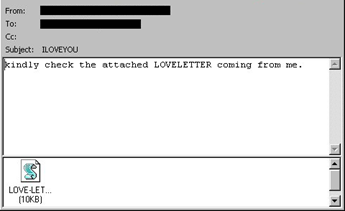
Curious to find out who might be declaring their feelings, many people clicked on the attached document. Of course, it didn't actually open — instead, it triggered the download of a malicious virus. Once installed, the virus replaced certain files on the computer and could then automatically send itself to all of the victim's contacts. At the time, this virus spread across the globe at lightning speed and caused enormous financial damage. It was one of the very first attempts at social engineering — a romantic lure.
Today, we're much more vigilant when it comes to this kind of tactic. Past experience has taught us to be cautious of unexpected documents. However, just as technology evolves, so do cybercriminals, who constantly refine their methods. More recently, a new form of fraud attempt has emerged: fraudulent invitations added directly to your calendar.
Today's Tactics
To better understand this maneuver, let's picture the scene.
On an ordinary Tuesday, you open your inbox to start your day and notice that a new event has been added to your calendar. The invitation bears an appealing title: "Annual Review and Salary Increase." Naturally, you're delighted by this unexpected good news.
In the associated email — as well as in the event itself — a message invites you to review a document to prepare for the meeting, or to click a link to join it. Being the organized person you are, used to arriving well prepared and never running late, you click the link without giving it much thought. And before you even realize what's happening… the attacker has succeeded. It's precisely these good habits that cybercriminals rely on to trap you.
In another scenario, let's imagine that this time you caught the fraud right from the start and reported the email as phishing. You did exactly the right thing. However, even though the email disappears from your inbox, the fraudulent event stays in your calendar — and that's where things can get dangerous.
If the event is scheduled a few weeks out, there's a good chance you'll forget it came from a malicious email. When the day arrives, you might click on the calendar entry simply to remind yourself what it's about. And if a reminder pops up in the middle of a busy day, it's easy to click by reflex, convinced it's a meeting you had forgotten.
That's exactly the moment when cybercriminals catch you. A single impulsive action is all it takes to activate the fraudulent link sitting in the invitation still in your calendar.
How to Protect Yourself Against This New Form of Fraud
Pause before interacting If the invitation is unexpected or out of the ordinary, avoid clicking on links, scanning QR codes, or opening attachments. Take a few seconds to check the sender and confirm the invitation is legitimate.
Verify through another channel If the sender seems real and familiar but the invitation is unusual, reach out to that person through a channel other than email.
If their inbox has been compromised, cybercriminals could be reading their messages. A phone call — or, if possible, an in-person check — is your best bet.
Report the fraudulent email The first step in fighting this kind of fraud is to report the email as phishing.
Also remember to notify your IT team so they can analyze the situation and take the necessary steps.
Delete or decline the calendar invitation Check whether the calendar event was removed along with the fraudulent email.
Some providers now automatically delete events tied to reported emails, but that's not the case everywhere.
If the event remains in your calendar, delete it or decline it right away. This prevents it from resurfacing later and being clicked by mistake.
Don't interact with links or documents Treat calendar invitations with the same caution as emails:
Don't click on unknown links. Don't open documents you weren't expecting. If you click by accident and a form asks for your login credentials, close the window immediately without entering anything, then contact your IT team right away.
Conclusion
The story of the ILOVEYOU virus reminds us that in cybersecurity, threats evolve, but the mechanisms of manipulation remain surprisingly similar: they play on our emotions, our habits, and our trust. Yesterday, it was a fake love letter. Today, it's calendar invitations designed to slip past our guard. Tomorrow, it may be something even more subtle.
What doesn't change, however, is the importance of staying alert, informed, and well supported. Protecting our data means protecting our peace of mind — and, in a way, taking care of what truly matters.
At MMO Techno, we understand how unsettling these threats can be. That's why we offer tailored cybersecurity services, designed to help you prevent these attacks, spot the early warning signs, and react quickly when something feels off. You're not alone in this digital battle: we're here to support you… with a little less romance than the ILOVEYOU virus, but a lot more protection.
If you'd like to strengthen your security or learn more, our team is always ready to help.