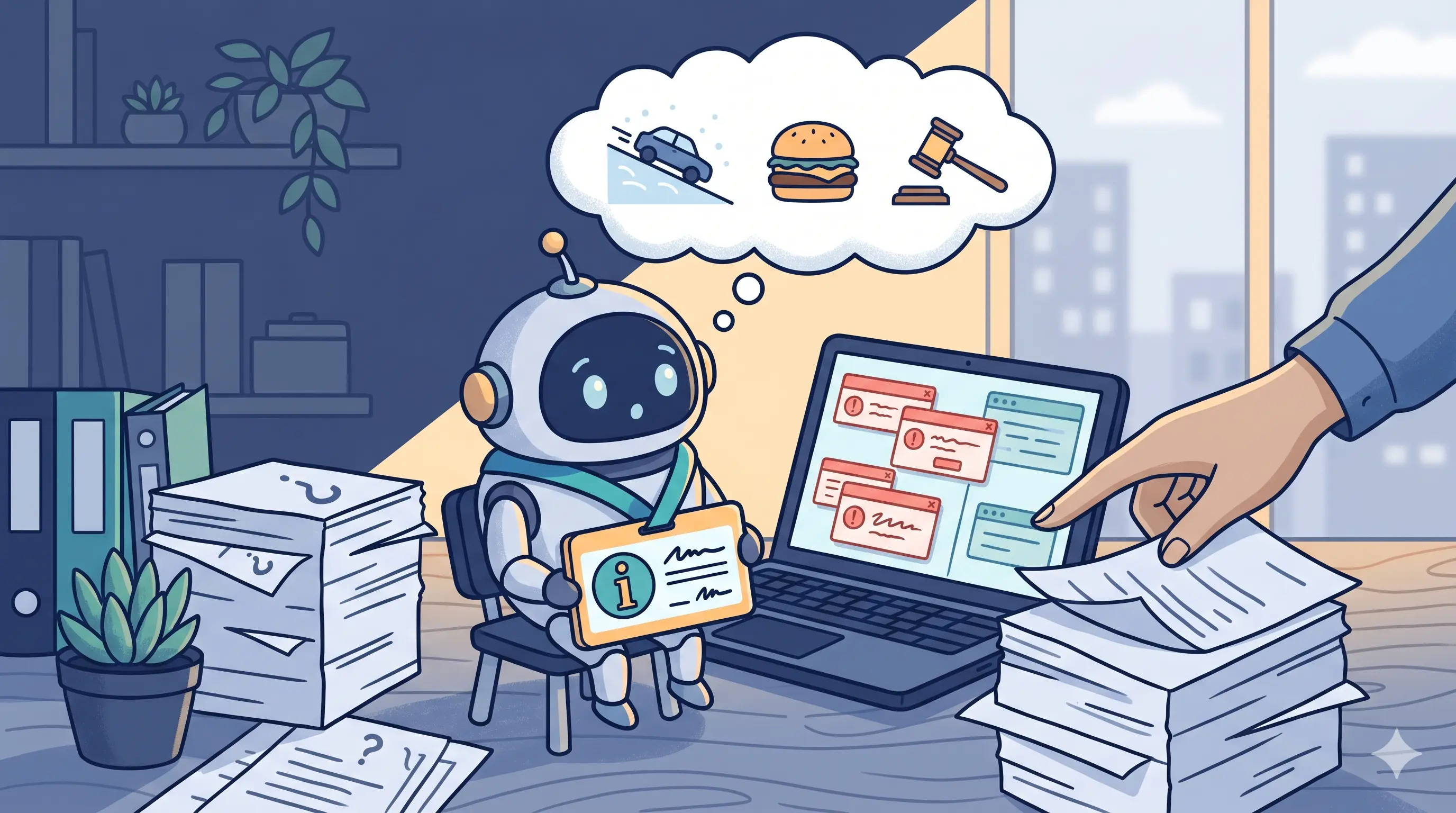
March always arrives with the same promises: more light, milder temperatures… and guaranteed disappointment. We break out the sunglasses, slip on a patch of ice, and are reminded that winter hasn't had its last word yet. So rather than fight against March, we might as well greet it with a sense of humour. In that spirit, this article looks at three moments when artificial intelligence made mistakes that led to comical consequences. Because just like the month of March, this revolutionary tool can also let us down.
Ski Slopes as Roads
We can all agree: GPS has become an essential tool today, especially when travelling in an unfamiliar country or region. Its main advantage is guiding us efficiently by calculating the fastest or shortest route to our destination. However, this drive for optimization is not without risks — particularly when artificial intelligence enters the picture… and gets it wrong.
In 2025, a driver following GPS directions through mountain roads found themselves stuck in the snow. In an effort to save time, the navigation system had suggested an alternative route that was supposed to be faster. As it turned out, this "road" was actually a ski slope. The result: the car got stuck, perfectly illustrating the limits of technology.
Chicken Nuggets Ordered by AI
In 2019, McDonald's launched a project to implement artificial intelligence for taking orders at the drive-thru. The main goal was to reduce human resource needs during order-taking while also cutting down customer wait times. However, the project was ultimately abandoned in 2024, following several comical incidents during its deployment.
Indeed, many customers reported unusual errors in their orders. For instance, one customer who wanted to order a simple ice cream cone ended up with the cone plus several boxes of Chicken McNuggets and various sauces added to their bill. While the amount could be corrected afterwards, the situation remains amusing to say the least. Faced with repeated incidents of this type, McDonald's decided to remove AI from the order-taking process, concluding that the results did not meet the company's expectations and quality standards.
When AI Invents Its Own Case Law
One last story takes place, this time, in a courtroom. As a rule, any good lawyer spends many hours on legal research in order to build a solid and convincing argument to effectively defend their client before a judge. This work requires rigour, patience and precision, since every argument must be supported by real, verifiable past decisions. However, this research is often long and complex, which can sometimes create the temptation to take shortcuts.
That's exactly what happened to a lawyer in the state of New York. In order to strengthen his case, he turned to artificial intelligence to find court decisions similar to his own to support his arguments. However, after submitting his file to the court, it turned out the cited cases simply did not exist. The artificial intelligence had fabricated entirely fictional court decisions, presented in a very credible manner, but completely made up.
This situation rendered the lawyer's argument inadmissible in the eyes of the judge and seriously damaged his professional credibility. The lawyer was severely reprimanded and sanctioned by the court for failing to verify the authenticity of his sources. This incident quickly became a striking example of the limits of artificial intelligence and the importance of human judgment, particularly in fields where rigour and accuracy are essential.
The Takeaway
From all these stories, one clear lesson emerges. While artificial intelligence represents a major advancement and is revolutionizing the world of work, it remains imperfect. Much like an intern in training, it requires constant supervision as well as rigorous validation of its work before its results are deployed or integrated into organizational processes. Human judgment therefore remains essential to frame its use and fully reap its benefits, while avoiding errors and missteps.
Did you know? The MMO team is here to support you with your various projects, including the implementation and optimization of artificial intelligence within your work processes. Whether you're looking for advice, guidance, or personalized support, don't hesitate to contact us: we'll be happy to help you unlock the full potential of AI, safely and effectively.